.png)
.png)
.png)
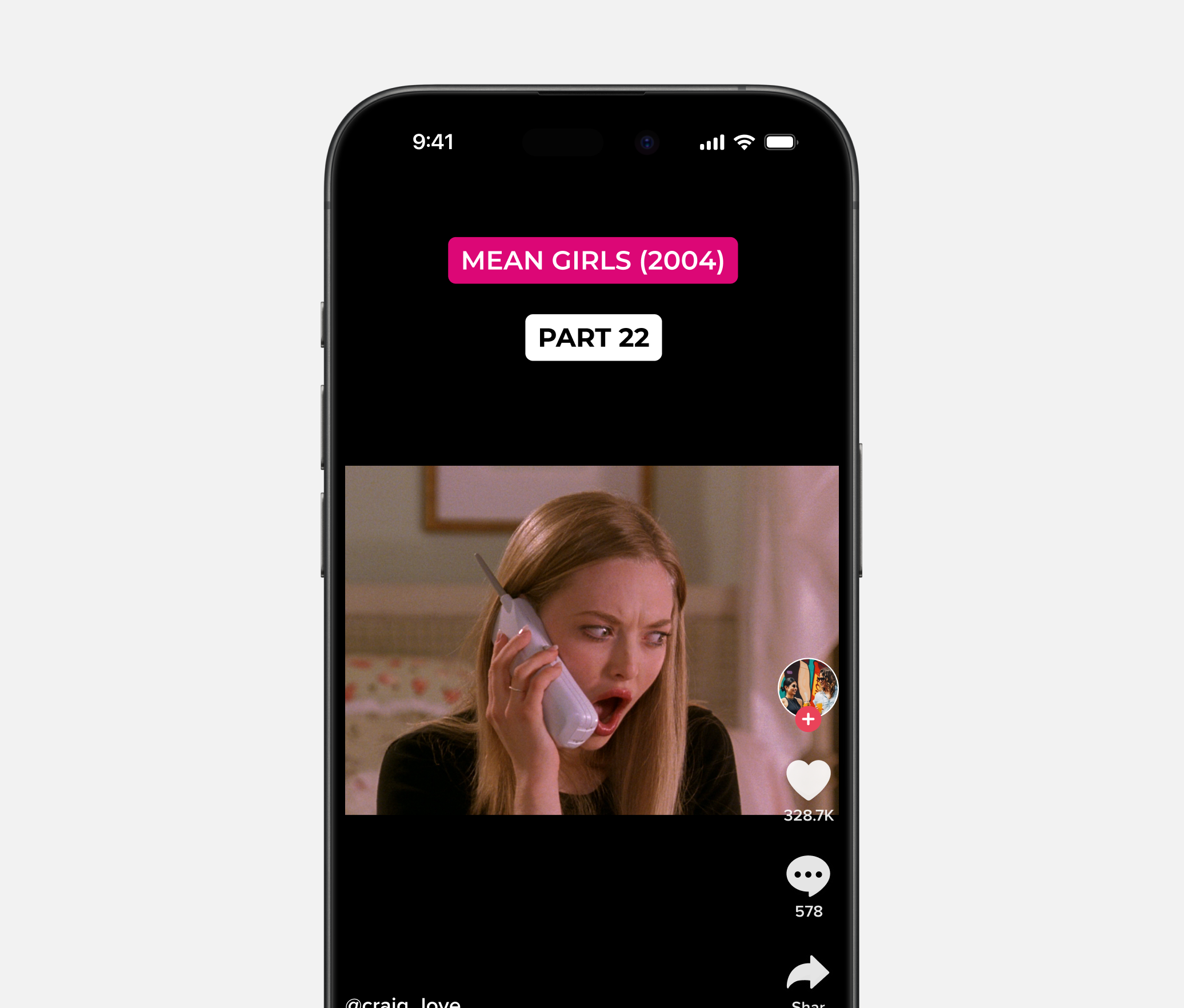
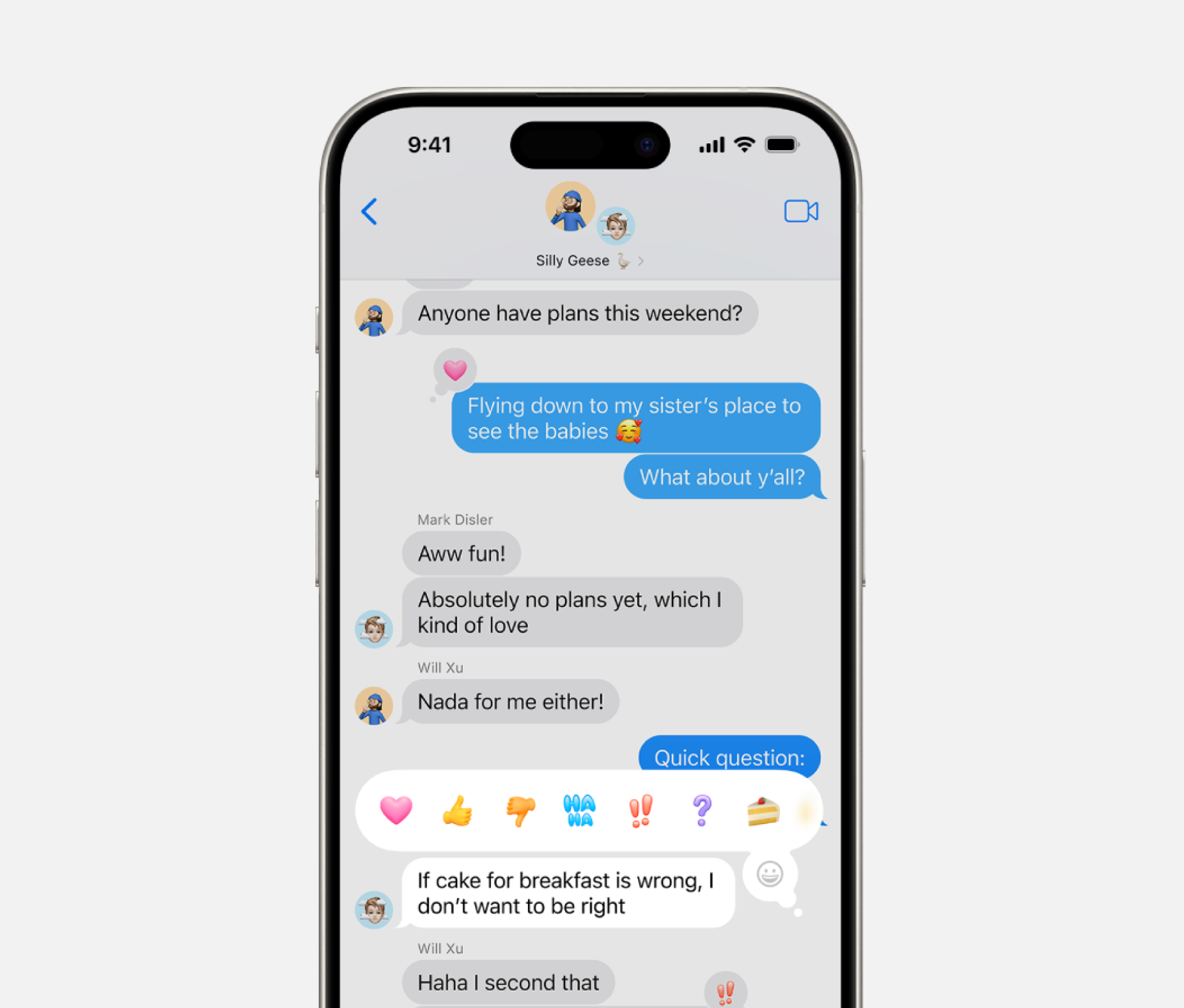
Between TikTok, texting, and other social media, students are used to consuming information in short, interactive bursts — not sitting down with long-form text. Literal had 800K+ students on the platform, but engagement data revealed a problem: students were scrolling through books without actually reading.
TikTok

iMessage

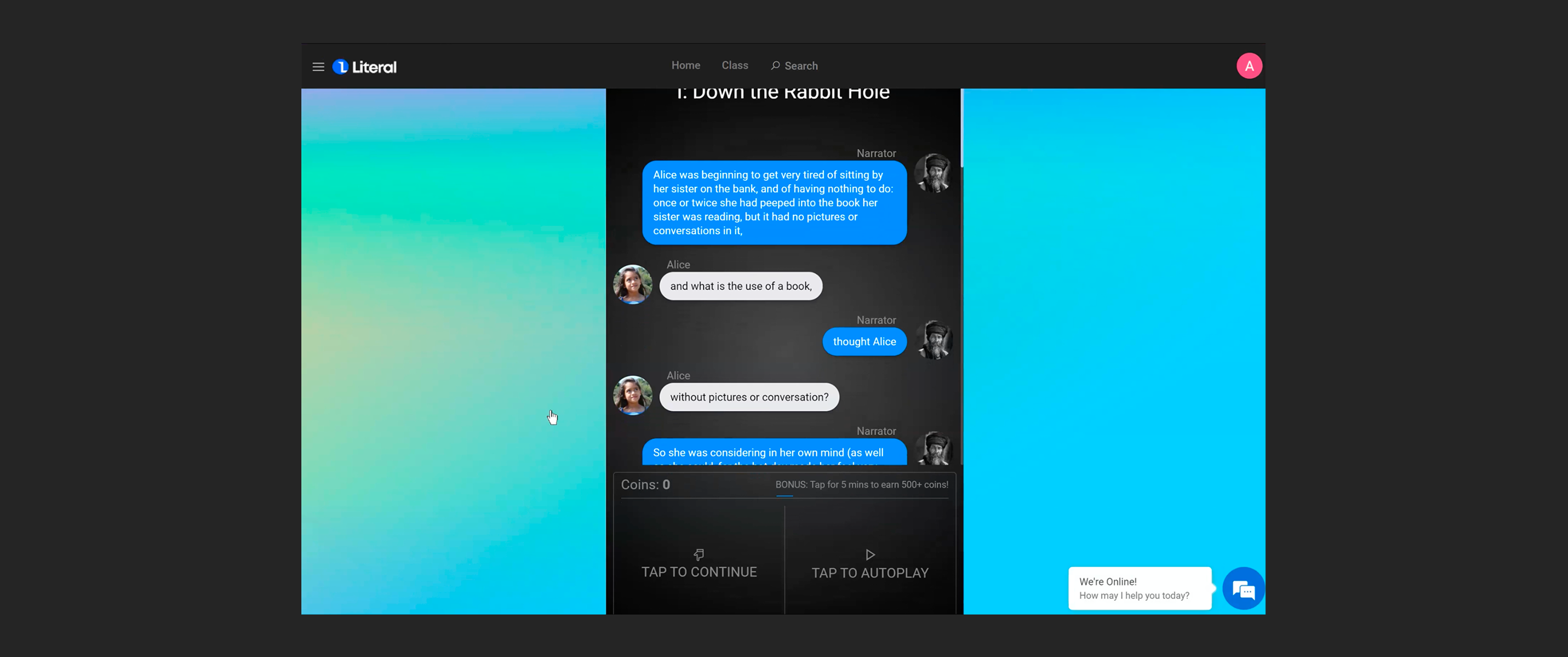
After interviewing 50 middle and high school students, a pattern emerged: Literal needed to feel more interactive & social like the apps students are already using but missed the mark when it came to execution.

The PWA had been built fast with cluttered layouts, poor contrast, inconsistent components, and a browse experience with no true discovery mechanic. Students weren't disengaged because they didn't want to read — the product made reading feel like work.
.png)

.png)
I reorganized the platform around the two moments that determine whether a student engages with a book at all: finding one worth reading, and actually getting through it.
.png)
How students move through the content and consume text
.png)
How students explore books and content that feel worth reading
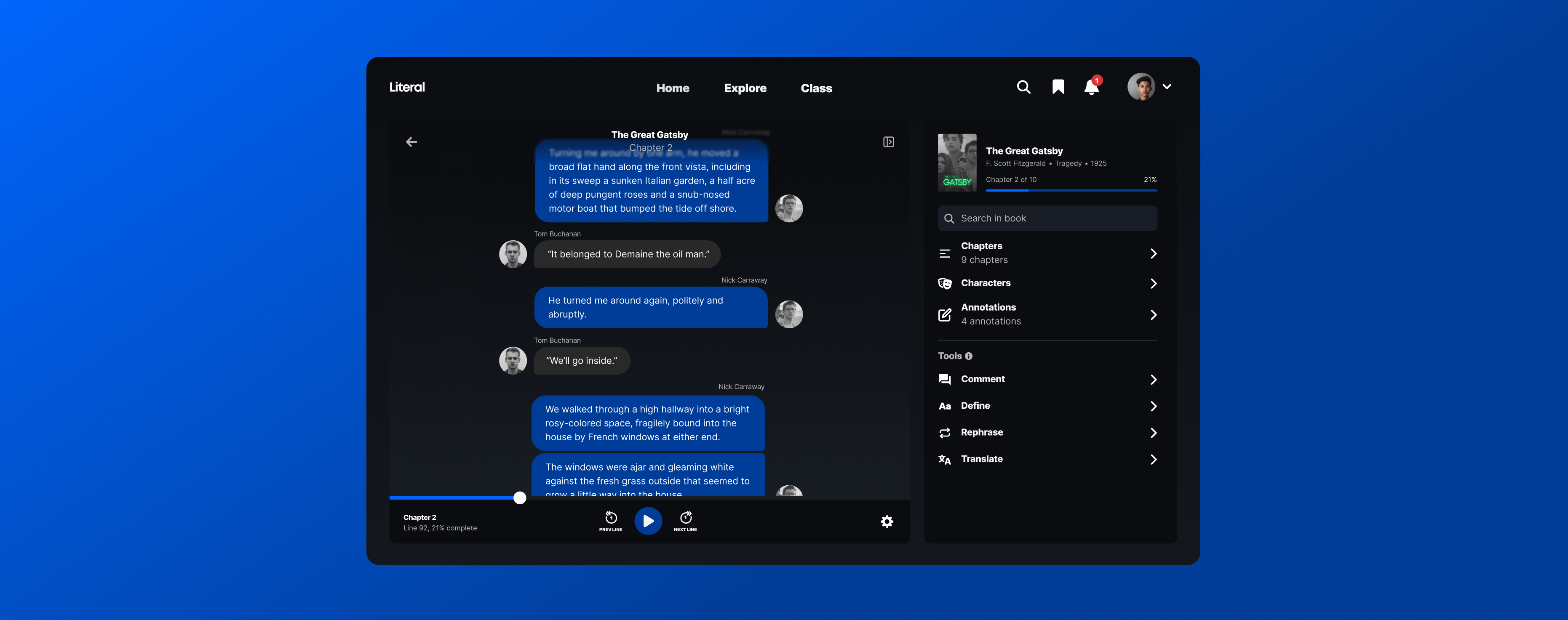
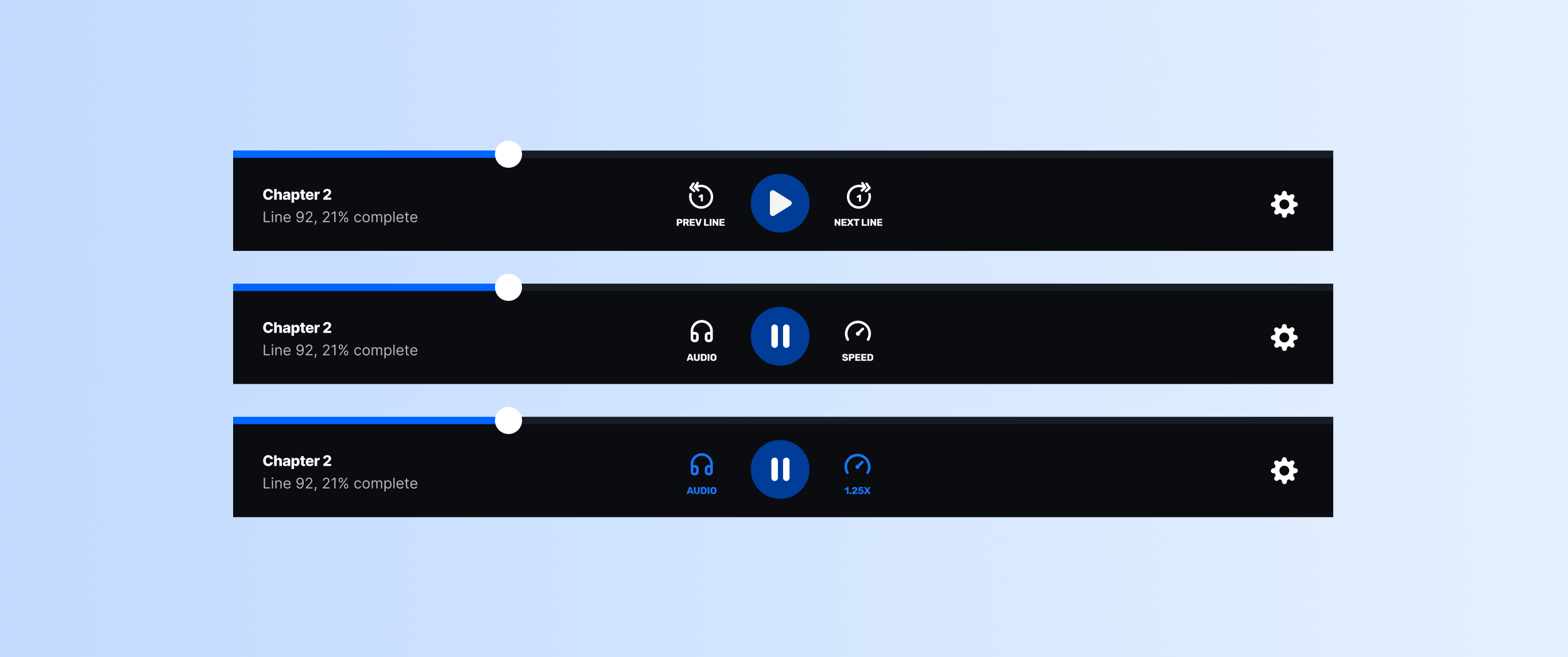
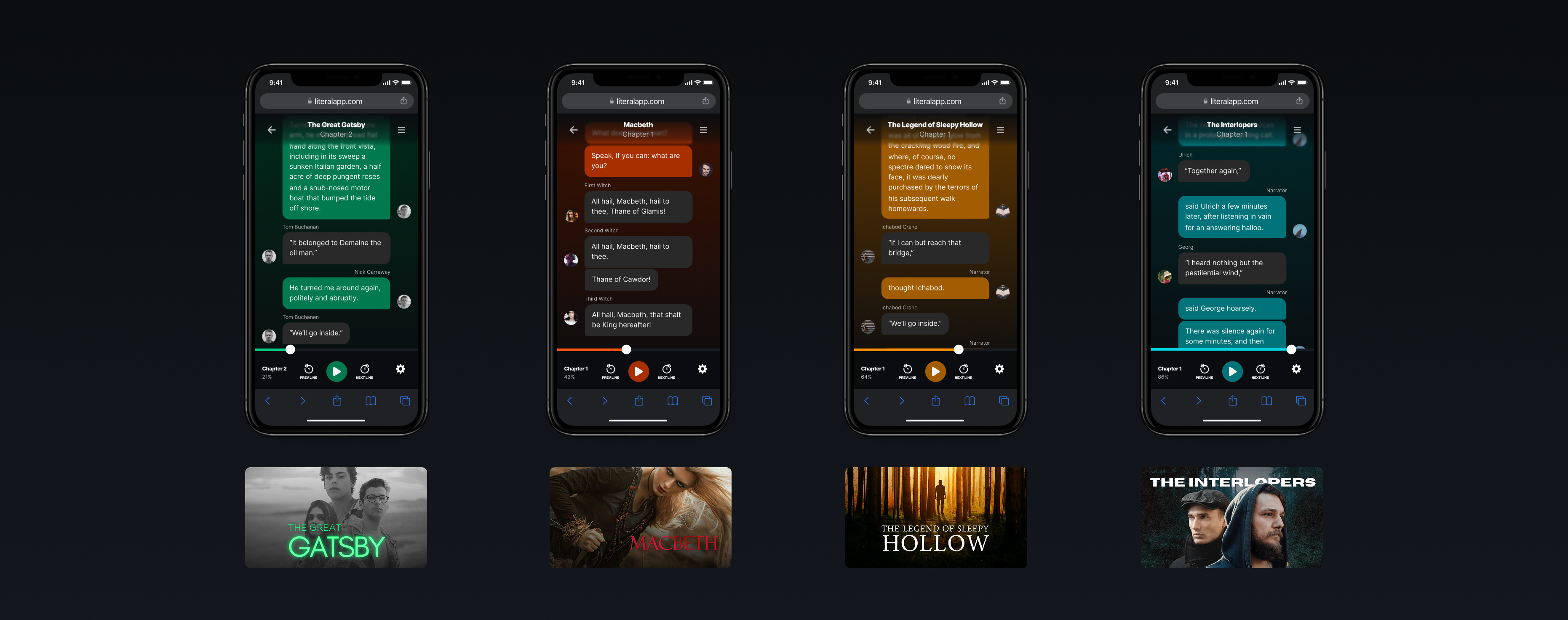
The new reader transforms traditional text into a conversational format that matches how students already consume content.

.png)


Students wouldn't engage with books that felt like assignments. Redesigning the discovery experience around familiar streaming conventions like cinematic covers and personalized recommendations reduced the barrier between curiosity and commitment.
.png)
.png)
Alpha testing showed the redesign moving in the right direction — reading completion increased from 25% to 32% and average session time grew from 17 to 28 minutes over a 1-month pilot in Utah.
While engineering constraints prevented a full rollout, the pilot results validated the core design hypothesis: make reading feel less like work, and students will do more of it.
of assigned reading completed
per reading session